Crazy Room 3D Action Puzzle in a Wild House
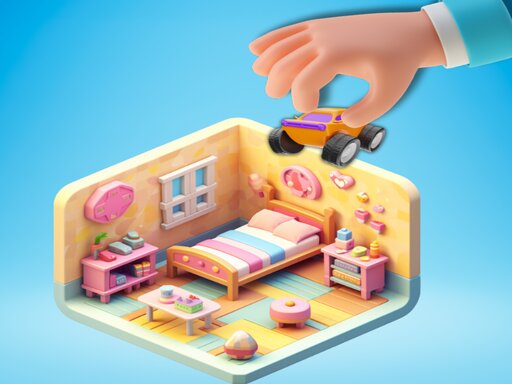
Jump into a fast-paced 3D puzzle where every move counts and the house itself becomes a playground of surprises. This hypercasual action challenge blends quick thinking with reflexes, letting you explore a wild home environment while solving compact spatial problems that keep your fingers busy and your mind sharp.
The setting is a compact home packed with interactive elements that react to your actions. Doors swing, furniture shifts, and hidden corners reveal new paths as you explore. The 3D perspective gives you a clear view of the space, but the layout changes just enough to keep you on your toes. You will need to read the room quickly, spot opportunities, and decide whether to move fast or plan a few steps ahead. The hypercasual style means controls are simple, yet the environment adds depth by rewarding clever movement and timing.
Each area of the house presents a small puzzle that fits into the larger flow of the game. You might need to push an object to create a ramp, open a door to redirect your path, or time a dash through a moving obstacle. The action never stops, and the house keeps offering new ways to interact, which makes every run feel fresh and engaging.
Core Mechanics and How to Play
Gameplay focuses on movement, timing, and quick decisions. You guide your character through rooms and corridors, using straightforward controls to run, jump, and interact with objects. The challenge comes from the way the environment responds. A simple tap can open a door that changes the entire route, and a well-timed jump can turn a dead end into a shortcut. The puzzle aspect is woven into the action, so you are always solving something while staying on the move.
Progress feels smooth because the game teaches through play. Early rooms introduce basic interactions, and later stages layer in more complex arrangements. You learn to read the space, anticipate changes, and react without hesitation. The hypercasual approach keeps the controls light and responsive, which makes the action feel immediate and satisfying.
Visual Style and 3D Presentation
The 3D look gives you a clear sense of depth and scale, which is essential for planning your next move. Colors are bright and readable, and the camera stays focused on the action so you never lose track of your character. The house has a playful design, with furniture and decorations that hint at a lived-in world without distracting from the puzzles. Effects are clean and snappy, so every interaction feels impactful.
Because the game is built for quick sessions, the visual presentation supports fast recognition. You can spot interactive objects at a glance, and the layout of each room is designed to be understood in seconds. This clarity helps you focus on strategy and timing rather than hunting for what to do next.
Strategy Tips for Faster Clears
Success comes from balancing speed with awareness. Rushing through a room can work if you have a clear path, but pausing for a moment to scan the space often reveals a better route. Look for objects that can be moved or activated, and consider how changing one element might open up another. Sometimes the best move is to wait for a door or obstacle to cycle, then strike at the right moment.
Practice helps you build a mental map of common room patterns. As you play more, you will recognize setups that reward specific actions, such as pushing a box to create a bridge or flipping a switch to stop a moving hazard. Keep your movements smooth and avoid overcorrecting, since the controls respond best to gentle inputs. Over time, you will develop a rhythm that lets you clear rooms with confidence.
Why Hypercasual Action Fits Puzzle Play
Hypercasual design strips away complexity so you can focus on the core loop of move, solve, and react. This approach pairs well with puzzle gameplay because it keeps the action flowing while still challenging your brain. You are not buried in menus or systems; you are in the room, making decisions and seeing results instantly. The result is a game that feels easy to pick up but offers plenty of depth through the environment itself.
The blend of action and puzzle also creates a satisfying learning curve. You improve by reading the space better, timing your moves more precisely, and finding smarter routes. Each success builds momentum, and the quick feedback loop keeps you engaged for another run. That mix of immediacy and growth is what makes this style of play so compelling.
Getting Started and Play Tips
When you first enter the house, take a moment to understand how your character moves. Test the jump, try interacting with a door, and see how objects respond. This quick warm-up helps you get comfortable with the controls and sets the tone for the rest of the session. From there, focus on one room at a time and look for the simplest solution before attempting fancy maneuvers.
As you progress, keep an eye on timing. Many puzzles revolve around when you act, not just what you do. Watch how obstacles move and learn the rhythm of each room. If a path feels blocked, try a different angle or look for a switch that might change the layout. Staying patient and observant will help you find the best route without wasting time.
FAQ
Is this game easy to learn? Yes, the controls are simple and the early rooms teach you the basics through play. You will be solving puzzles and navigating the house within minutes.
Do I need to download anything? No, you can play directly in your browser. The game is designed for instant access so you can jump in without setup.
How long are the sessions? Sessions are short and friendly for quick breaks. You can clear a few rooms in a few minutes or keep going for a longer run.
What makes the puzzles challenging? The challenge comes from the environment reacting to your actions. Doors, furniture, and obstacles change the space, so timing and route planning matter.
Can I play on mobile? The game is built for smooth play across devices. The controls are responsive and the visuals are clear on smaller screens.
Is there a way to improve my performance? Yes, practice reading the room quickly and learn the timing of moving elements. Small adjustments in movement and patience lead to faster clears.
Ready to jump in and explore the wild house? Click the link below to start playing now and see how fast you can solve the puzzles and clear the rooms.