Blobs And Sheep: Weapon Choices, Safe Rescues and Limited Ammo
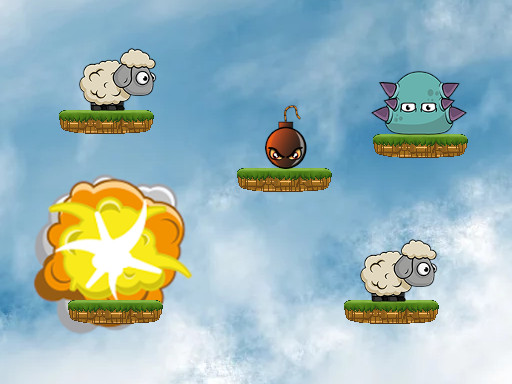
Saving a sheep and destroying a blob are not interchangeable successes in Blobs And Sheep. The game asks you to remove the threats while keeping the animals safe, so an impressive explosion can still be a poor move. Before choosing a weapon, look at what the shot could affect besides its intended target. That extra moment of assessment is often the difference between a controlled solution and an avoidable loss.
In Blobs And Sheep, you select a weapon and then choose the direction to shoot or throw it. Bullets and explosive grenades deal with blobs; available teleportation grenades can move sheep to safety. Destroying sheep, or running out of ammunition with blobs remaining, reduces the high score. These rules make ammunition planning and protection of the sheep central to the puzzle.
Survey the board before firing
Begin by locating every visible sheep and blob. Then inspect the space between your firing position and the intended target. A target that appears easy to reach may have a sheep beside it or another object affecting the route. Treat the first shot as a decision about the whole arrangement, not simply a click on the most obvious enemy.
Check which weapons are actually available in the current situation. A plan that requires a teleportation grenade is not useful if you do not have one. Likewise, planning a long sequence of direct shots without checking ammunition can leave threats unresolved. Count the visible requirements of your idea before spending a resource you cannot assume will be replaced.
You do not need to solve every detail instantly. Establish the immediate objective and the risks it creates. If a sheep is close to a blob, ask whether eliminating the threat directly is reasonably safe or whether moving the sheep first would make later shots clearer. The best order depends on the layout and the tools you currently have.
Match the weapon to the problem
A bullet offers a different kind of decision from an explosive grenade. With a direct shot, examine the line toward the target and what lies along it. With an explosive, think about the surrounding area as well as the point you intend to hit. Aiming at the right blob is not enough if the wider effect also threatens a sheep.
Do not assume that one weapon is always the efficient choice. An explosive may be useful against a suitable grouping, yet an isolated target near an animal can call for a more careful approach. The relevant question is what the current arrangement permits, not which weapon seems strongest in the abstract. Power without control can undermine the rescue objective.
Before committing, state the intended outcome in simple terms: remove a particular threat, clear an area safely or prepare a later shot. If you cannot explain how the selected weapon contributes, reconsider it. This habit helps distinguish a planned move from an experiment performed simply because the weapon icon is available.
Use teleportation for safety when it helps
Teleportation grenades provide another way to protect sheep when they are available. Instead of trying to solve every dangerous arrangement by shooting closer to an animal, consider whether moving it to safety reduces the risk. This is a resource decision, so it still needs to fit the remaining tasks and ammunition rather than becoming an automatic first move on every board.
Think about the rescue and the following attack together. If moving a sheep makes a dangerous explosive shot unnecessary, it may simplify the rest of the solution. If all threats can already be removed safely, spending a special tool might not be needed. Compare the situation before and after the proposed rescue instead of treating teleportation as a separate bonus action.
Avoid promising yourself an outcome before observing the result. Watch where the sheep ends up and reassess the remaining threats. A good plan can require adjustment when the board changes. Continuing a memorized sequence without inspecting the new state can waste the advantage created by the rescue in the first place.
Make an ammunition budget
Running out of ammunition while blobs remain carries a high-score penalty, so the remaining threats matter before every shot. Count the blobs you still need to deal with, identify any safe opportunities to address more than one problem, and compare that work with your available tools. This is a planning check, not a guarantee that one shot always removes one target.
Consider what you would do if the next shot achieves only part of its intended result. Does your plan still leave a reasonable option, or does it depend on every detail working perfectly? Where the layout permits a safer alternative, preserving a useful follow-up can be better than committing everything to an uncertain attempt with no recovery plan.
Avoid wasting shots simply to confirm something you could learn by looking. If the problem is that a sheep sits beside the intended blast, firing the explosive will not make the risk disappear. Study the arrangement and choose a different order or tool when one is available. Experimentation is valuable when it answers a real question about the game's behavior, not when it repeats an obvious danger.
Aim with a purpose
The documented interaction is to select the weapon first and choose its firing or throwing direction afterward. Check that the selected tool matches the move you intend. An accurate direction with the wrong weapon can still create an unwanted result, so selection deserves its own moment of attention before you concentrate on aim.
For a difficult attempt, identify the exact part of the movement you want to change. You might be altering the direction while keeping the same tool, or changing the tool because the previous effect was too broad. Changing both without thinking makes the result harder to understand. A clear experiment teaches more than a hurried sequence of unrelated shots.
After firing, allow the visible consequences to settle before planning the next action. A physics-based arrangement can change when objects are affected. Check the sheep, the remaining blobs and the new opportunities rather than assuming the board still matches the picture you studied before the shot. The next decision should use the current state.
Order matters more than speed
There is little value in quickly removing an easy blob if doing so leaves a sheep exposed to your next necessary move. Consider whether the easy target can wait while you address the more constrained part of the board. The difficult relationship often determines the useful order, while isolated targets may offer more flexibility later.
As a planning example, imagine a sheep close to an area where you would like to use an explosive. If a rescue tool is available and appropriate, protecting the sheep before attacking may produce a clearer solution. This example describes a decision pattern, not a fixed level walkthrough or a claim that every board contains the same arrangement.
You can also work backward from the final unresolved threat. Ask what tool and position would let you deal with it safely, then consider which earlier moves preserve that possibility. This backward check helps prevent a common resource mistake: using the tool you need later because it seemed convenient for an easy target now.
Review losses without repeating them
When a sheep is destroyed, identify the action that put it at risk. Was it in the line of a shot, close to the intended explosive effect, or affected after the board changed? Understanding that relationship is more useful than merely trying the same weapon with a slightly different click. The problem may be the order of actions rather than aim alone.
When ammunition runs out, compare the plan with the shots actually taken. Did you miss a target, spend a weapon unnecessarily or leave the hardest blob until no suitable tool remained? Each explanation leads to a different correction. More careful aiming cannot solve a budget that required more resources than you had from the beginning.
Keep one lesson from each attempt. It might concern a safer order, a better direction or a tool that should have been preserved. You do not need a complete written walkthrough to improve. A small, specific observation can make the next attempt more deliberate and reduce the chance of repeating the same avoidable loss.
Choosing this puzzle over another action game
Blobs And Sheep combines projectile decisions with a protection objective. It suits a player who enjoys considering consequences before committing, even though the effects on screen can be lively. Do not mistake it for a game in which you control a blob by running and jumping around the board. The central interaction here is weapon selection and directional shooting or throwing.
For more games organized around observation and problem-solving, browse the Puzzle Games collection. The category includes different kinds of challenges, so read the selected game's instructions rather than assuming every puzzle uses ammunition, projectiles or a rescue target. The comparison is about the kind of thinking involved, not identical controls.
Before your next shot, ask four questions: which sheep could be affected, which blobs remain, which tool is selected and what resources will remain afterward? Together they turn a potentially chaotic scene into a manageable decision. Destroy the threats, preserve the animals and inspect the result before acting again. That is the foundation of a cleaner solution and a more purposeful attempt at protecting the high score.