Mastering the Tile Puzzle Game for Brain Training
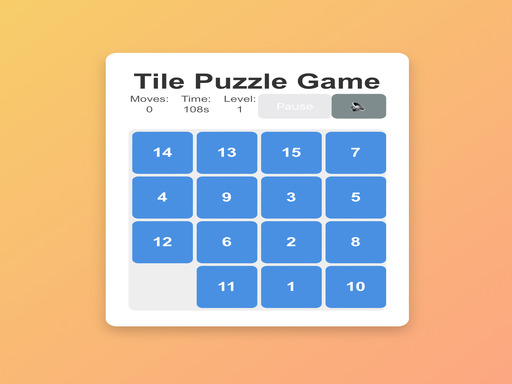
Sharpen your mind with a classic challenge that fits in your pocket. The Tile Puzzle Game offers a simple yet addictive way to train your brain, improve focus, and enjoy a satisfying sense of progress every time you slide the pieces into place.
The goal is straightforward: rearrange a scrambled grid so the tiles form a complete picture or pattern. You move one tile at a time into the empty space, sliding rows and columns until the image comes together. It sounds easy, but each move requires planning, and the best path is rarely obvious. This gentle learning curve makes the game welcoming for beginners while still offering depth for experienced players.
Because the game relies on spatial reasoning rather than reflexes, it fits a wide range of play styles. You can take your time, experiment with different sequences, and watch how each decision affects the overall layout. The empty space becomes a tool you can use to set up longer chains of moves, and learning to think several steps ahead is the key to faster solves.
Brain Benefits of Tile Sliding
Sliding puzzles train working memory, pattern recognition, and logical thinking. As you scan the grid, you hold potential move sequences in your mind and evaluate which tiles should be moved first. This mental juggling strengthens short-term memory and attention to detail. Over time, you start to notice common patterns and develop heuristics that speed up your solves.
There is also a calming effect that comes from focused play. The rhythmic motion of sliding tiles and the gradual emergence of the final image can reduce stress while keeping your mind engaged. It is a productive form of relaxation that leaves you feeling sharper rather than drained.
Getting Started with the Puzzle
Begin by locating the empty space and identifying which tiles are closest to their correct positions. Move the border tiles first, then work inward. This approach reduces unnecessary shuffling and keeps the board organized. Try to build rows or columns from the edges toward the center, and avoid breaking up sections you have already aligned.
Patience is your best friend in the early stages. Instead of rushing, pause after each move to see how the grid changes. You will quickly learn how a single slide can set up multiple tiles at once, and that awareness will help you make cleaner, more efficient choices.
Smart Strategies for Faster Solves
One powerful technique is to solve the puzzle in layers. Start with the top row, then the bottom row, and finally the middle. This layered approach reduces complexity and gives you clear milestones to hit. Another strategy is to use the empty space as a temporary holding area, cycling tiles through it until they line up where you want them.
Look for sequences that bring two or three tiles closer to their targets with each move. If a slide does not improve the overall arrangement, it might be better to try a different path. Over time, you will develop an intuition for which moves are productive and which ones create chaos.
Common Mistakes to Avoid
A frequent error is moving tiles without a plan, which can scatter progress and force you to backtrack. Another pitfall is focusing too much on a single tile while ignoring the rest of the board. Keep your eyes on the whole grid and think about how each move affects the bigger picture.
Do not be discouraged by temporary setbacks. Even experienced players get stuck and need to undo a few moves. The key is to recognize when you are looping and to reset your approach rather than forcing a solution that is not there.
Staying Motivated and Tracking Progress
Set small, achievable goals to keep your momentum going. Aim to shave a few moves off your last solve or complete a new difficulty level. Celebrate the moments when a tricky section finally clicks into place. These micro-wins build confidence and make practice feel rewarding.
Consistency matters more than marathon sessions. Short daily plays can lead to noticeable improvement over a week. As your skills grow, you will find yourself solving puzzles that once seemed impossible, and that progress is a powerful motivator.
Play the Tile Puzzle Game Now
Ready to put your brain to the test? Jump in and start sliding tiles today. You can play the Tile Puzzle Game right here and see how quickly you can master each challenge. It is free, fun, and perfect for a quick mental workout anytime.
Whether you are looking for a relaxing break or a focused brain training session, this puzzle delivers a satisfying experience. Start a new round, set a personal best, and enjoy the simple joy of watching the image come together one tile at a time.
FAQ
Is this game suitable for beginners?
Yes. The rules are simple, and the difficulty grows naturally as you progress. New players can learn the basics quickly while still finding a challenge.
Do I need to register or download anything?
No. You can play directly in your browser without downloads or accounts. Just open the game and start solving.
Can I improve my skills with practice?
Absolutely. Regular play helps you recognize patterns, plan moves more efficiently, and reduce the number of steps needed to solve each puzzle.
What makes this puzzle good for brain training?
It engages working memory, attention, and logical reasoning in a focused, low-stress environment. The steady feedback from each solve keeps you motivated and mentally active.